Sunday, April 19, 2009
2 Meter DX - Working M6MOF
This afternoon I heard Caine - M6MOF working from his mobile in Lincolnshire whilst I was monitoring S20 on the 2 meter band. Caine - M6MOF is a member of the Brigg and District Amateur Radio Club - BDARC and is also a fellow YouTuber.
We made a qso on 145.525 FM and Caine was coming with a 5/2 signal to my FT-847 and 7/8 wave vertical antenna.
Thanks to Caine's video cam you can hear how well he received me at his end.

2M Tour
The last week has been spent touring around the South West Coast of Scotland and taking in the many spectacular sights as well as making some good radio contacts on the way!
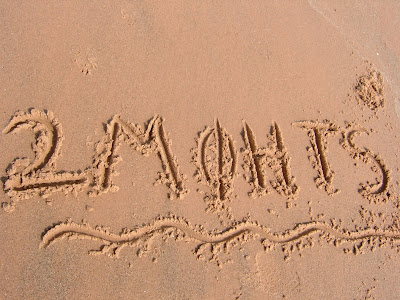 We arrived at Ayr where we were to be based for the stay at the beginning of the week and once we checked in at the accommodation, we were straight out checking out the scenic views and lovely beaches.
 Listening around the bands from the mobile set up proved to be very interesting as the noise levels were none existent allowing weak signals to be heard with ease especially on the 20 meter band.
I found a nice beach side location to park up the Toyota to try work back to some of the big signals we were hearing.
 Louise - M3TLL (MM3TLL/M whilst in Scotland) kept the log and I began putting out a few shouts operating under the Scottish prefix 2M0HTS instead of my home call 2E0.
It wasn’t long before the calls were answered back to other operators on the 20 meter band, the first contact I made was at 19.13 utc on Tuesday with UR5ZVP who was 5/9. Then at 19.15, I worked Mike – W2YP from N.York again 5/9, followed by KG4CN – Dan operating out of Guantanamo Bay, also 5/9 both ways. Mike – KA3UOL was next with a 5/7 signal from central Pennsylvania followed by AB9HP – Rick in Indiana coming 5/5.
The last station worked before we walked on the beach with Dudley the beach loving greyhound was CT1VV – Alberto from Lisbon, Alberto was a strong 5/9 signal.
 The following day we visited Maidens and then Dunure Castle where I worked Archie - VE9AR from Kingspeer. Archie was 5/6 and struggled with me a bit as it was early (11.10 utc) and the band was only just opening up.

The next stop off was at Greenan Castle close by to the heads of AYR, we had a bacon sandwich and a hot drink made on the camping stove which always seems to taste the best for some strange reason!
 Later on that day (Wednesday) we returned to the Sea Side DXing parking spot which was between Ayr and Prestwick and gave out a few CQ calls. N3GN – Ken returned to the call from Galena in Maryland with a 5/9 report and a nice rag chew! I was then called by MM3IPU – Alan from nearby Dreghorn, We had a good 15min qso and Alan mentioned he had worked a VU (Indian) station earlier in the day. The next station to call me on 20M was also local operator Chris – MM0ABB, Chris was located in Kilmaurs which was close to Kilmarnock which is also in Ayrshire and he was also booming through with 5/9. It was a pleasure to meet these two guys on 20m and I hope I hear them on the LF bands in the future.
On the drive back to the hotel I heard MM0BIM calling CQ 2meters so I gave him a shout back whilst mobile. MM0BIM – Gordon returned to the call back and we had a good half an hour talking about the local area. Gordon recommended that we visit Largs, and also that we should check out local phenomenon known as the Electric Brae . We followed Gordon’s advice the very next day and had a great time, not to mention the dog who loved the stunning empty beaches and beautiful views of the offshore Islands.
 As we took in the stunning views and cooked lunch on the petrol stove I heard IT9RYH – Nino in Scilly, I called Nino and had a pleasant qso with Nino as we watched the seagulls dive into the clear sea water catching their lunch. IT9RYH – Nino was 5/9+ to Gull point at Portencross which was where we were parked up.
 After lunch we explored Ardneil Bay and went on to Ardrossan beach which over looked Horse Isle.
Later that evening we parked up on the promenade at Ayr and worked VE3LX – Herman, from Thunder Bay near Lake Superior. Herman was 5/7 back to my mobile Yaesu Ft-857 and Maldol HFC-20m antenna. I tuned around as the band was slightly quieter than the previous evenings and then I came across Tony – IZ6BXV. I gave Tony a quick 5/9 report and had one last tune around.
 The last station I worked from the sea view parking spot was W2IW – Mike from North Carolina which was a difficult copy but I got there in the end. I got a 5/4 report back and gave Mike a 5/7 into Ayr.
All good things must come to an end and Friday we set off back to the home qth via the coastal route which passed through Galloway and Dumfries and then into Cumbria. I made a couple of contacts on the way back down which were ER5GB – Alex from Moldova who was 5/9+ and RV3NA – Serge 300km N.E of Moscow also coming with a 5/9 signal.
Once we crossed the border I returned to 2E0 and as we entered N.Yorkshire I worked fellow CRAG member Adam – M6AXL from Keighley followed by old CB mate from many years back M3RIZ – Craig, also located in Keighley.
We arrived home safely and now need another holiday to get over that one h.i.
Thanks to all stations worked and also thanks to MM0BIM – Gordon for his suggested places to visit. Very enjoyable!
 We arrived at Ayr where we were to be based for the stay at the beginning of the week and once we checked in at the accommodation, we were straight out checking out the scenic views and lovely beaches.
 Listening around the bands from the mobile set up proved to be very interesting as the noise levels were none existent allowing weak signals to be heard with ease especially on the 20 meter band.
I found a nice beach side location to park up the Toyota to try work back to some of the big signals we were hearing.
 Louise - M3TLL (MM3TLL/M whilst in Scotland) kept the log and I began putting out a few shouts operating under the Scottish prefix 2M0HTS instead of my home call 2E0.
It wasn’t long before the calls were answered back to other operators on the 20 meter band, the first contact I made was at 19.13 utc on Tuesday with UR5ZVP who was 5/9. Then at 19.15, I worked Mike – W2YP from N.York again 5/9, followed by KG4CN – Dan operating out of Guantanamo Bay, also 5/9 both ways. Mike – KA3UOL was next with a 5/7 signal from central Pennsylvania followed by AB9HP – Rick in Indiana coming 5/5.
The last station worked before we walked on the beach with Dudley the beach loving greyhound was CT1VV – Alberto from Lisbon, Alberto was a strong 5/9 signal.
 The following day we visited Maidens and then Dunure Castle where I worked Archie - VE9AR from Kingspeer. Archie was 5/6 and struggled with me a bit as it was early (11.10 utc) and the band was only just opening up.

The next stop off was at Greenan Castle close by to the heads of AYR, we had a bacon sandwich and a hot drink made on the camping stove which always seems to taste the best for some strange reason!
 Later on that day (Wednesday) we returned to the Sea Side DXing parking spot which was between Ayr and Prestwick and gave out a few CQ calls. N3GN – Ken returned to the call from Galena in Maryland with a 5/9 report and a nice rag chew! I was then called by MM3IPU – Alan from nearby Dreghorn, We had a good 15min qso and Alan mentioned he had worked a VU (Indian) station earlier in the day. The next station to call me on 20M was also local operator Chris – MM0ABB, Chris was located in Kilmaurs which was close to Kilmarnock which is also in Ayrshire and he was also booming through with 5/9. It was a pleasure to meet these two guys on 20m and I hope I hear them on the LF bands in the future.
On the drive back to the hotel I heard MM0BIM calling CQ 2meters so I gave him a shout back whilst mobile. MM0BIM – Gordon returned to the call back and we had a good half an hour talking about the local area. Gordon recommended that we visit Largs, and also that we should check out local phenomenon known as the Electric Brae . We followed Gordon’s advice the very next day and had a great time, not to mention the dog who loved the stunning empty beaches and beautiful views of the offshore Islands.
 As we took in the stunning views and cooked lunch on the petrol stove I heard IT9RYH – Nino in Scilly, I called Nino and had a pleasant qso with Nino as we watched the seagulls dive into the clear sea water catching their lunch. IT9RYH – Nino was 5/9+ to Gull point at Portencross which was where we were parked up.
 After lunch we explored Ardneil Bay and went on to Ardrossan beach which over looked Horse Isle.
Later that evening we parked up on the promenade at Ayr and worked VE3LX – Herman, from Thunder Bay near Lake Superior. Herman was 5/7 back to my mobile Yaesu Ft-857 and Maldol HFC-20m antenna. I tuned around as the band was slightly quieter than the previous evenings and then I came across Tony – IZ6BXV. I gave Tony a quick 5/9 report and had one last tune around.
 The last station I worked from the sea view parking spot was W2IW – Mike from North Carolina which was a difficult copy but I got there in the end. I got a 5/4 report back and gave Mike a 5/7 into Ayr.
All good things must come to an end and Friday we set off back to the home qth via the coastal route which passed through Galloway and Dumfries and then into Cumbria. I made a couple of contacts on the way back down which were ER5GB – Alex from Moldova who was 5/9+ and RV3NA – Serge 300km N.E of Moscow also coming with a 5/9 signal.
Once we crossed the border I returned to 2E0 and as we entered N.Yorkshire I worked fellow CRAG member Adam – M6AXL from Keighley followed by old CB mate from many years back M3RIZ – Craig, also located in Keighley.
We arrived home safely and now need another holiday to get over that one h.i.
Thanks to all stations worked and also thanks to MM0BIM – Gordon for his suggested places to visit. Very enjoyable!
Wednesday, April 08, 2009
Holiday DX and Satellite Activity
This week has been excellent so far regarding radio and up here on the blustery Moor top, I am in to my 3rd day of holidaying away from work loving every second!

I started off on Monday running in and out of the garden making lots of QSO’s via the “birds”. I worked into AO-51, SO-50 and AO-27 very easily using the two hand held rigs coupled to the tripod mounted Arrow antenna. The little Station performed very well with 4W, making 12 good contacts and a couple of others that were caught up in the QRM. The Satellite worked Stations I managed to exchange locaters and reports successfully with were, LY3L , RA3OEV, UA9FFF, DG7MHR, OH7FES, F1UGK, ON4CAP, MM3YEQ, F1UGK (again but this time on a different Satellite), EB1GKS, EI2HW and regular contact/fellow Yorkshire Man, DL1YAL - Steve . I am still getting very excited when the signals are booming through as I point the antenna into the Sky and call “CQ Satellite”. Hope to play some more when the wind drops.
In between running in and out and as one neighbour once said “Taking picture’s of the sky” (How they can mistake a Cross Band Yogi for a camera? It is quite amusing) I have kept a check on the HF bands.
Whilst listening around LF and HF in between the Satellite passes, I found myself on 18 MHz – 17M, I managed to get lucky and worked CO8LY for the first time on 17M as well as working VP5/WF5CW who was also on 17M...
I then went on to work KU4WE up on 20M.
Later on in the evening I played some more radio and joined in on the local CRAG net which takes place Monday evenings usually around 144.562.500 MHZ using FM.
*********************************************************************
With the day before been so much fun I was up early Tuesday listening out for some 20m DX.
It was a good job I did as I came across VK7ROY from Tasmania who was coming 5/7 into my FT-767 using the Home brew delta loop. I called back with a 5/5 signal into Tasmania to find that Roy - VK7ROY was originally from South England.
Shortly after that around about 08.18 utc I heard VK6MV also called Roy and also originating from England, I called VK6MV again on the Loop and Yaesu FT-767GX and managed to put a 5/6 into Cuballing in Western Australia.
VK6MV - Roy came with a 5/8 solid copy up here on Baildon Moor and we had quite a rag chew, Roy mentioned that he uses email to QSL so I sent an email and gratefully received Roy’s QSL today. ;-)

Friday, April 03, 2009
"Bird" Watching
It's that time of the year where we find ourselves spending as much time as possible in our gardens or out walking enjoying and making the most of the much welcomed lighter nights.
As well as walking over the surrounding Moorland with our Dog Dudley this evening, I decided to root out my QRP Satellite set up. The portable set up comprises of my arrow antenna, FT-470, TH-F7, Ipaq and my old Compass.

I gave the Yaesu FT-470's batteries a quick charge and headed back out side just as it was getting dark (18.45 utc). I assembled both hand held transceivers to the home made ally rig mounts that are fitted to the boom extension.
Next, was to run the TrackSat software on the Ipaq palm held P.C which showed AO-51 approaching.
I checked the satellites position data and used it to set the arrow to 205 degrees azimuth and 10 degree elevation. It wasnt long before a hive of activity began to flow through the arrow into the FT-470. I called through AO-51 a couple of times using the TH-F7 for the up link transmission hearing myself on the down link via the FT-470. The little station works extremely well and despite the pile up I am sure I heard Fellow Hams and keen Satellite Ops LA4FPA Erling and Steve DL1YAL somewhere in there!
I should be busy outside in the fresh air operating over the weekend (WX permitting) as I participate in watching some "Birds" that might be putting a nice footprint over the QTH.

Wednesday, April 01, 2009
Official CRAG Members

Tonights Craven Radio Amateur Group meeting took place and the group voted and annouced that Louise - M3TLL and myself Simon - 2E0HTS are now officially members of the group.
It is fantastic news that we are now both "Craggies" and We are excited about getting involved with the CRAG monthly activations.
Tuesday, March 24, 2009
Views on changes to Portuguese Licensing system
I was alarmed to hear this news on the weekly RSGB news broadcast. For those that can’t be bothered clicking the link I’ll summarise: they are introducing a new licensing system in Portugal whereby Foundation licensees have 5 years to upgrade to an intermediate license or they lose it.
I think this is incredibly short sighted of the Portuguese licensing people. As an M3 who’s had her license for 3 years if they introduced this ruling here in the UK (which some G stations have recently been arguing for in the letters section of Radcom, much to my annoyance) this would mark the end of my hobby. In fact you’d probably hear me on CB frequencies instead - I’d be the only operator not swearing their head off.
I’ll say it loud and clear for all to read: I have absolutely no intention of getting an intermediate licence. Why you may ask? Well my Foundation licence gives me everything I need, I can operate 10 watts. I have the shop bought Yaesu FT-847 plugged into the shop bought length of co-ax plugged in to a shop bought hustler 6-BTV. Plug it all in and off you go.
In my opinion the next classes of licences are out-dated and overly technical. Spend £500+ on a radio and you have no interest in opening it up soldering on some extra parts and seeing how much better, or in fact how much you’ve buggered it up in the process. The licence in this day and age should be all about operating practices and procedures, making sure people use it correctly, safely and so you understand how to prevent interference. If I wanted to do electronics I’d enrol at the local tech, I don’t, I want to talk to people and work stations all over the world, which, with today’s technology you can manage to do perfectly well on 10 watts.
As for the G station who keeps writing to Radcom moaning about Foundation licensees, he should be more welcoming to the hobby. I see older stations as Yoda figures, helping to train the youngsters into good, professional amateurs, encouraging people to want to be on air. However, there are all too many who want to knock others confidence and keep it just for old-timers only.

People need to realise that Ham Radio is quite literally a dying hobby, you only need to compare the Silent Key section of Radcom to the new licences issued to realise that if more people aren’t attracted to radio soon, more portions of the bands will be left unused and eventually sold off for commercial use. Which, to a sceptic like me is probably why the Portuguese are introducing the ‘use it or lose it’ rule in the first place.
de M3TLL
I think this is incredibly short sighted of the Portuguese licensing people. As an M3 who’s had her license for 3 years if they introduced this ruling here in the UK (which some G stations have recently been arguing for in the letters section of Radcom, much to my annoyance) this would mark the end of my hobby. In fact you’d probably hear me on CB frequencies instead - I’d be the only operator not swearing their head off.
I’ll say it loud and clear for all to read: I have absolutely no intention of getting an intermediate licence. Why you may ask? Well my Foundation licence gives me everything I need, I can operate 10 watts. I have the shop bought Yaesu FT-847 plugged into the shop bought length of co-ax plugged in to a shop bought hustler 6-BTV. Plug it all in and off you go.
In my opinion the next classes of licences are out-dated and overly technical. Spend £500+ on a radio and you have no interest in opening it up soldering on some extra parts and seeing how much better, or in fact how much you’ve buggered it up in the process. The licence in this day and age should be all about operating practices and procedures, making sure people use it correctly, safely and so you understand how to prevent interference. If I wanted to do electronics I’d enrol at the local tech, I don’t, I want to talk to people and work stations all over the world, which, with today’s technology you can manage to do perfectly well on 10 watts.
As for the G station who keeps writing to Radcom moaning about Foundation licensees, he should be more welcoming to the hobby. I see older stations as Yoda figures, helping to train the youngsters into good, professional amateurs, encouraging people to want to be on air. However, there are all too many who want to knock others confidence and keep it just for old-timers only.

People need to realise that Ham Radio is quite literally a dying hobby, you only need to compare the Silent Key section of Radcom to the new licences issued to realise that if more people aren’t attracted to radio soon, more portions of the bands will be left unused and eventually sold off for commercial use. Which, to a sceptic like me is probably why the Portuguese are introducing the ‘use it or lose it’ rule in the first place.
de M3TLL
Saturday, March 21, 2009
Welding Wire Dual band Satellite Yagi Project.
After seeing the pictures sent by Cyril F4FUL of his homemade dual band Arrow style Satellite Yagi, I finished off the prototype model I had been building during the week.
The newly finished off home brew Yagi antenna comprises of 4 X 144-146 MHz Elements & 8 X 432-435 MHz Elements. The Elements are made from 3.0 mm Welding Rod and the boom is a wooden broom handle. The Elements are gently tapped into 2.5mm (tight fitting) drilled holes in the boom. I used two lengths of 50 ohms Coax soldered straight on to each of the two bands driven folded dipole element.
Finished and all tuned up and ready to assemble to the mast.
I used a PVC mount which connected to the boom acting as a bush and allowed simple elevation adjustment locked off with a 6mm bolt.
Set at 30 Degrees Elevation looking southerly into this evenings sky.
 Now it will be a case of testing as I have got some nice lengths of 6mm ally bar which is waiting to become either extra elements for the IOIo or a Cross Axis dual band yagi? I will have a better Idea of the best all round performance once the prototype welding wire model makes some QSO’s. I heard some good signals from South England and Scotland earlier on 144 SSB, It seems to be working ok so far only the test of time will tell.
The newly finished off home brew Yagi antenna comprises of 4 X 144-146 MHz Elements & 8 X 432-435 MHz Elements. The Elements are made from 3.0 mm Welding Rod and the boom is a wooden broom handle. The Elements are gently tapped into 2.5mm (tight fitting) drilled holes in the boom. I used two lengths of 50 ohms Coax soldered straight on to each of the two bands driven folded dipole element.
Finished and all tuned up and ready to assemble to the mast.

I used a PVC mount which connected to the boom acting as a bush and allowed simple elevation adjustment locked off with a 6mm bolt.

Set at 30 Degrees Elevation looking southerly into this evenings sky.

 Now it will be a case of testing as I have got some nice lengths of 6mm ally bar which is waiting to become either extra elements for the IOIo or a Cross Axis dual band yagi? I will have a better Idea of the best all round performance once the prototype welding wire model makes some QSO’s. I heard some good signals from South England and Scotland earlier on 144 SSB, It seems to be working ok so far only the test of time will tell.
Friday, March 20, 2009
Spring equinox and its effect on propagation
For all of you living in the Northern Hemisphere today is a great day. Today the Spring Equinox (or Vernal Equinox) is upon us, this is great as it hails goodbye to winter and officially means the start of Spring.
At 11:44 UTC the sun crossed over the Earth’s equator which means longer hours of sunlight for all of us up North! Thanks to the Earth’s tilt 23.4 degree tilt we will now be getting more of the Sun’s rays increasing the temperature (hopefully) and signalling the start of Summer.
The Spring equinox also has a marked effect on propagation. We will now be having longer hours of sunlight. These longer hours mean the sun will be increasing the energy in the ionosphere more than during the winter.
You may have noticed propagation improving over the last few weeks, this is due to the Spring equinox. The Vernal equinox is a particularly good time for HF propagation as on the first day of spring the length of the day and night in both the Northern and Southern hemispheres will be 12 hours each. During both the Spring and the Autumn equinoxes the northern and southern hemispheres both have an even distribution of solar radiation making it the optimum time for DX. As a result of the equinox bands should be more likely to stay open and there should be more reliable propagation paths between the Northern and Southern hemispheres.
Equinoxes are also the time when auroras are most likely to occur (so keep an eye out for Aurora Borealis in the night sky). Caused by solar flares colliding with nitrogen and oxygen atoms in the atmosphere they usually take place in the E and D layers of the atmosphere. Auroras affect both HF and VHF propagation, decreasing the quality of HF signals but opening up interesting possibilities for VHF operators.
For those of you wanting some light entertainment on the subject of auroras and amateur radio you might want to try the 2000 Dennis Quaid film Frequency I’m not sure you’ll be lucky enough to get the kind of propagation found in this film, but at least with Summer now officially on the way propagation might start to improve.
Fingers crossed for some decent solar activity!
de M3TLL
Monday, March 16, 2009
Homebrew Dual Band Yagi
I have recently been in qso via the Internet with Cyril F4FUL Who Is
located in the French Alps, locator square JN36EH.
Cyril had recently built an IOIo Satellite antenna and was interested in building a antenna similar to the ARROW antenna He saw me using in one of last years videos. The tests showed that the Arrow does out perform the IOIo. I agreed signal reports and comparisons with Cyril, Who then said he was on his way in building one and would keep in touch. I was interested to see what Cyril - F4FUL would come up with?
Here is the result:
The F4FUL, Home Brew, Dual Band Arrow like Yagi.
4 elements VHF and 10 elements UHF.


Thanks Cyril F4FUL, for your images. 73 Good DX!
Thanks to Cyril's inspiration, I also came across some specs for a simple antenna build similar to the Arrow. I have almost completed one and have yet to add the feeder to complete the first attempt. I have built this "prototype" antenna from 2.5mm wire and a broom handlel I will post detailed info about the latest project shortly.
Here is the information I have been looking at via the web. I used this formula to build the "prototype" Yagi. I will be trying it sometime this week.
Dimensions for a 3/6 Element Dual Band Yagi Beam

Thursday, March 12, 2009
Mobile DXing working JO7CVU & 6Y/WE9V/Portable
Two Great Contacts worked from my Mobile HF Station - JO7CVU from N.JAPAN and 6Y/WE9V Portable from JAMAICA.
My Location was close by to my Home QTH up at 1000ft on Baildon Moor, W.Yorkshire, N.ENGLAND
The first QSO was JO7CVU worked on my way to work at 08.20 utc.
The second QSO was 6Y/WE9V portable worked on my return journey at 17.00 utc.
73, Thanks for all radio contacts & thanks for watching!
My Location was close by to my Home QTH up at 1000ft on Baildon Moor, W.Yorkshire, N.ENGLAND
The first QSO was JO7CVU worked on my way to work at 08.20 utc.
The second QSO was 6Y/WE9V portable worked on my return journey at 17.00 utc.
73, Thanks for all radio contacts & thanks for watching!
Early morning Mobile Dx into North Japan
 This morning I was fortunate to hear some big signals coming through on my mobile work bound journey. I heard VK3MO from Austrailia with a 5/9 just as he was closing down. I then tuned up the band (20M) and came across Kentaro - JO7CVU from Sendai City, North Japan.
Ken was coming through 5/8 and peaked at 5/9, I gave Ken a quick call from the mobile FT-857 and Maldol 20M antenna and too my great surprise Ken - JO7CVU came straight back to me and gave me a 5/6 report.
I managed to sweet talk Louise M3TLL to video the contact with Ken, I should be uploading it this evening. This definately was a great copy from my mobile running 50watts in to North Japan, I will be listening out for early morning DX tomorrow.

Wednesday, March 11, 2009
Contesting
 Last week and this week I decided to try and work some stations during Tuesday nights RSGB VHF Contest. The Contests are held weekly on Tuesday evenings and Cover five VHF Bands. I have operated on two of the five Contest bands 144MHZ and 433MHZ.
Below is the table found at the RSGB Contest Committee Site explaining what band is used and the operating times of each Tuesday's evening Contest. Also the previous month - January's results can be seen via the Results links.
Every 1st Tuesday | 2000-2230 (Local) |
| ||||
Every 2nd Tuesday | 2000-2230 (Local) |
| ||||
Every 3rd Tuesday | 2000-2230 (Local) |
| ||||
Every 4th Tuesday | 2000-2230 (Local) |
| ||||
Every 5th Tuesday | 2000-2230 (Local) |
|

The contacts I made during both Contests were worked using the Yaesu FT-847 and the home made single loop horizontal antenna better known as the IOIo beam. ON 144Mhz I ran 50W and worked 17 stations with the furthest Station to be worked being M0BRA at a distance of 279km. The results were even better on 433MHz which surprised me as I only worked 10 stations with QSB and poor conditions, again I used the FT-847, IOIo antenna and this time only 35Watts. The furthest Station worked at 302km away was G5LK. Many Thanks to all Stations worked, I had a lot of fun as well as obtaining a few points!
I will be looking forward to using my humble antenna system and QRP Station in many more VHF Contests, hope to work some of you!
Most of you HF guys will have been active this weekend either Taking the ARRL Contest serious or like myself looking out for DX and giving a few points away at the same time. I made some nice QSO Sunday evening on 20M as the band stayed open until my bed time. I worked near enough 25 Stations in one hour with big signals and lots of fast signal reports/Power output exchanges. I worked on the 20M band with my Yaesu FT-847 and Vertical Antenna - Hustler 6BTV (ground mounted with 4X 20M radials). To my amazement the change in signal reflection and propagation path had influenced the change of my preferred HF Station a Yaesu FT-767GX and Full wave Delta loop that normally does the best job for me. Not the case this time, It is good to have a choice of the two set ups. Check out the log to see the ft-847, 50W and a 6BTV performance.
Click on log to enlarge

That's all folks, until next time! 73!
Saturday, March 07, 2009
The 2E0HTS Portable Antenna Mast Mount
Since I sold my Toyota Rav 4 I haven't had the means of setting up the spare Hustler 6BTV - Base Station Multi Banded HF Vertical. I used the tow bar fixing which I had made and had some excellent results with that one, not to mention the 14,411 YouTube Views on the Video I made using it.
With the first Mast Mount Creating so much attention the pressure was on to come up with another Mast Mount strong enough to bear the Hustler's 6 Band Load in windy but typical Yorkshire conditions.
I had seen some wheel bearing Mast Mounts on eBay, so I decided to make up my own version which worked out well.
Materials used:
3mm Mild Steel Plate, Cut at 260mm wide X 550mm long.
25mm X 25mm X 3mm Angle Iron (L), Two pieces cut to a length of 550mm.
70mm X 70mm X 3mm plate square, Two pieces cut in half into a triangle to become gusset supports.
200mm diameter 3mm plate, cut plate into a half circle then drill 12, 6mm holes to be used as radial mounts.
38mm diameter mild steel bar, 600mm long used as mast stub. ( I used solid bar, but pipe is also OK).
I cut the plate using a guillotine with a 6mm a capacity, The angle iron strengthening strips were cut using a hack saw. The Iron bar was cut by band saw and the holes in the plate were cut using a plasma cutting torch.
I then assembled each component using the Metal Inert Gas (M.I.G) Welding process.
click on drawing to enlarge
 Each joint is welded on both sides to ensure maximum strength
 Extra support provided by using gussets.
 Pre drilled for accepting different radial wave lengths and cut to mate up to the Steel bar - Mast.
 Tacked up ready to finish off the M.I.G Welding fun..
 Some weight removed but strength still maintained using a plasma cutting torch.
 The Proud owner and fabricator of Portable Mast Mount Number 2, Me Myself and I. (and you if you email me).
 3 Tonnes of Toyota Estima holding down the Mount with the Hustler 6BTV fixed to it demonstrating its function.
 The result... Looking good so far, will be building up the antenna properly soon and adding a few radials whilst trying it out on the FT-857 mobile/portable set up.
 More to follow regarding using the mount and antenna the next time I go out for a drive around, I will be looking forward to that!
Monday, March 02, 2009
Last night before pulling the plug
Last night before pulling the plug, I had a last radio contact to make which was with M0OGY - Dave in North Lincolnshire.
I recently became friends with Dave - M0OGY, via the ever growing YouTube Community of "Hams" and "SWLs" that have some very interesting Amateur radio videos on YouTube.
Dave and I recently worked each other for the first time last week on 2M SSB .
Last nights QSO was worked on 80m a totally different band, which worked much better with bigger and louder signals sent and received.
Dave's Shack looks impressive and can be seen in his video as he works with a Yaesu FT-1000 Delta, G5RV and 100 Watts.
I used My Yaesu FT-767 GX, Heil GoldLine Mic, G5RV, and 50 Watts to make the contact with Dave.
Tnx Dave.
It is a useful tool to be able to use YouTube as a means of checking how your station is sounding at the other end of the QSO.
I will slightly back down the ALC after hearing myself on Dave - M0OGY's Video.
Watch Dave's YouTube Video of the QSO at his end, where you can hear us both up to no good. hi hi
Saturday, February 28, 2009
Site Meter Visits

It always amazes me where in the World you are all located! Thanks again for visiting Ham Radio.Operator.Blogspot.com and
Subscribe to:
Posts (Atom)

-
After being asked for my audio settings for the FTDX101MP (or FTDX101D) I thought I would share my settings here for you to view. ...
-
 I came across a simple delta loop design courtesy of dxzone found on the net some time ago and have been planning to give it a go for a whil...
-
 This Antenna design was one that I used about 4 years ago, it worked exceptionally well on 80m and 40m. The size of the antenna makes a Half...
